
During and after pregnancy, nutrition plays a crucial role in children’s health and development. Nutrition education can help mothers make better choices and know “what to eat,” enabling them to improve their eating habits and those of their child.
Synthesis PDF Complete topic PDFInformation sheets
Download the free PDF version here or purchase hardcopy prints from our online store.
Nutrition – Pregnancy
Nutrition: developing healthy eating habits during pregnancy
Synthesis
How Important Is It?
Pregnancy, infancy and early childhood are the most significant periods of growth and development in the human life cycle. Poor nutrition during these critical growth and developmental periods places infants and children at risk of impaired emotional and cognitive development and adverse health outcomes.
The Canadian National Population Health Study (1998/1999) reported that over 10% of Canadians were living in food-insecure households. Food insecurity, which involves worrying about not having enough money to buy food, compromises the quality and quantity of food. Approximately 35% of Canadians in low-income households and 14% in middle-income households experience some form of food insecurity.1 Since poor and malnourished women find it difficult to achieve adequate nutrition, their health is compromised during their reproductive years. Women who enter each pregnancy with depleted physical resources perpetuate a cycle of mother-child malnutrition.
In Canada, two well-known programs, the Canada Prenatal Nutrition Program (CPNP) and the Community Action Program for Children (CAPC), have been implemented to support the prenatal/post-natal nutrition, health and development of women and young children. As national community-based health-promotion interventions, both the CPNP and the CAPC help community groups to establish and deliver services that address the health and nutritional needs of at-risk groups.2
What Do We Know?
Quantity and quality of nutrients are essential to infant and child development. Many studies on nutrition have associated poor prenatal and early post-natal nutrition or malnutrition with a variety of developmental outcomes. Preterm and low-birth-weight (LBW) infants are especially vulnerable and more likely to experience some of these problems:
-
growth retardation (weight, height, head size)
-
delayed psychosocial development
-
cognitive, educational and/or behavioural problems
-
an increased risk of later psychiatric disorders
There is some evidence that the adverse effects of poor early nutrition can be reduced. Nutrient-enriched formulas have been shown to reduce motor and mental developmental deficits in preterm and LBW infants in the first 18 months of life. Although limited, psychosocial stimulation of growth-restricted infants helps improve their cognitive abilities. Other evidence supports the fact that LBW infants who are fed their mother’s milk, compared to those fed bovine-based formula, have better short-term visual and developmental outcomes, although variables such as daily intake and duration of breastfeeding should also be considered.
While it is essential to improve preterm and LBW infants’ development, research should also focus on the prevention of premature and low-weight births.
What Can Be Done?
Improving maternal and child nutrition requires a range of strategies and interventions designed to ensure adequate diets prior to pregnancy, during pregnancy, breastfeeding, early childhood and all stages of the life cycle. Researchers strongly recommend the integration of services such as family planning, post-partum and breastfeeding support, nutritional and health-care services, with all services provided in one locale. The U.S. Supplemental Nutrition Program for Women, Infants and Children (WIC) is a highly regarded example of an integrated program that provides 1) supplemental foods; 2) nutrition education; and 3) referrals to health-care and social-service providers.
Education is an essential element in maintaining proper nutritional health. Caregivers need to be aware of how early feeding experiences, appetite regulation and dietary patterns affect the development of healthy eating habits and adult health, and the fact that these patterns can be passed down to the next generation. Healthy eating habits are formed in early infancy and depend on positive interactions between infant and caregiver. It is the caregiver’s role to ensure that mealtimes are consistent, pleasant, family-oriented, social occasions that give children the opportunity to try a variety of nutritional foods required for healthy development. Additional research is needed on the familial and environmental influences, including cultural and transgenerational factors, that affect the development of healthy eating patterns.
Policy-makers and planners can greatly assist the improved nutritional health of women and children by supporting the development of evidence-based dietary guidelines and effective prevention and intervention services, especially for socio-economically disadvantaged families. They can also help by making maternal and child nutrition an integral part of comprehensive programs that serve women and children.
References
- Che J, Chen J. Food insecurity in Canadian households. Health Reports 2001;12(4):1-22. Statistic Canada, Cat. no. 82-003-XPE. Available at: http://www.statcan.gc.ca/pub/82-003-x/2000004/article/5796-eng.pdf. Accessed February 15, 2017.
- Health Canada. Health promotion effectiveness. Health Policy Research Bulletin 2002;1(3). Available at: http://www.hc-sc.gc.ca/sr-sr/alt_formats/hpb-dgps/pdf/pubs/hpr-rps/bull/2002-3-promotion/2002-3-promotion-eng.pdf. Accessed February 15, 2017.
Discover more
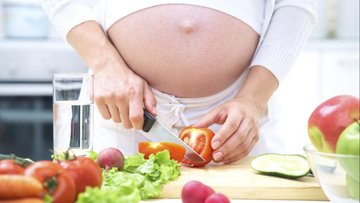
How does poor nutrition during pregnancy harm children?
Pregnancy, infancy and early childhood are the most significant periods of growth and development in the human life cycle. Poor nutrition during these periods can lead to a range of health problems.
Poor nutrition while the baby is in the womb and just after birth can lead to:
Growth retardation
Delayed psychosocial development
Cognitive, education and behavioural problems
Increased risk of later psychiatric disorders
It’s essential that mothers and babies get sufficient quality nutrients. This should be a priority before pregnancy, during pregnancy, breastfeeding, early childhood and all stages of the life cycle.
Publications
Program and Services to Improve the Nutrition of Pregnant Women, Infants and Young Children
Long-Term Effects of Prenatal and Early Postnatal Nutrition on Adult Psychosocial Outcomes

Resources and bulletins
Thematic bulletin
Nutrition and ECD: Do we have the right recipe?
Volume 3, Nº3 - December 2004