
Attachment is the emotional bond between the child and the parent. To fully grasp the significance of this bond, it is important to understand the different types of attachment, how they develop, and the impact of this bond on young children’s development.
Synthesis PDF Complete topic PDFInformation sheets
Download the free PDF version here or purchase hardcopy prints from our online store.
Attachment
Parent-child attachment: a bond of trust
Attachment
Parent-child attachment: a bond of trust (Aboriginal parents)
Synthesis
Topic Editor:
Topic funded by:

How important is it?
Attachment is the emotional bond of infant to parent or caregiver. It is described as a pattern of emotional and behavioural interaction that develops over time, especially in contexts where infants express a need for attention, comfort, support or security. Parental sensitivity, defined as the ability to perceive, interpret and react promptly and appropriately to their infant’s signals and needs, influences the quality of the attachment relationship. According to Bowlby’s attachment theory, the relationship developed with primary caregivers is the most influential in children’s lives. A secure relationship not only fosters positive developmental outcomes over time, but also influences the quality of future relationships with peers and partners.
Secure parent-child relationships help children to regulate their emotion in stressful situations and explore their environment with confidence. Secure attachment also fosters children’s cognitive, emotional and language development. Furthermore, children who are securely attached are predisposed to display positive social behaviours (e.g., empathy and cooperative behaviours) helping them to develop future positive relationships. On the other hand, insecure and disorganized attachment put children at increasing risk of problem behaviours and psychopathologies. Examples include preschool and school-aged aggression, depression, and socioemotional maladjustment.
What do we know?
Attachment is thought to develop in four phases:
- Infants respond indiscriminately to people for contact and affection;
- Infants’ behaviours (gaze, cries, coos, smiles, babbling) are displayed to specific people;
- Infants show active attachment behaviour with primary caregivers and become anxious when separated from them; and
- Infants enter a goal-corrected partnership where they negotiate with caregivers.
Parent-child attachment relationships are typically assessed with the Strange Situation Procedure, in which infants’ reactions to being reunited with one of their primary caregivers following a brief separation are examined. From these interactions, patterns of attachment relationships are determined. Infants who actively seek proximity with their parents on reunion and communicate their distress are securely attached. In contrast, infants who avoid their parents or remain inconsolable on reunion are usually insecurely attached. Some infants display a disorganized attachment style, characterized by contradictory behaviours toward parents (e.g., strong avoidance with strong contact-seeking, distress or anger).
Sensitive parenting in the early years plays a key role in the emergence of secure attachments. For example, parental support, acceptance of the child and sensitive behaviours during joint play foster a secure attachment. In contrast, domestic violence, frightening, insensitive or neglectful caregiving or maltreatment are important predictors in the development of attachment insecurity and disorganization. Changes in parental acceptance or disruption of the family can alter attachment pathways in either direction, temporarily or permanently.
Studies suggest that day care may have indirect effects on the attachment relationship, contingent on many factors, such as the social context (familial, cultural, societal) in which day care is experienced. Indeed, its influence on attachment security has been found to vary across countries (e.g., Australia, Israel, United States). Its impact is also a function of the quality, type, timing and quantity of care provided. Although high-quality day care may buffer the negative effect of parental insensitivity in some cases, the security of child-parent attachment is primarily guided by the sensitivity of maternal care.
The critical dependence of a child’s adaptive development on the supportive environment provided by the parent takes on particular importance when considering the millions of families worldwide that have been forcibly displaced from their homes. These conditions and unusual levels of stress leave parents with few psychological or physical resources to provide developing children with the environment they need.
What can be done?
Considering the life-long consequences of child-parent relationship quality during the early years, prevention and intervention programs designed to promote secure attachment are of crucial importance. That said, there are important factors to take into consideration when implementing those programs, including their content, duration, behavioural focus and the populations targeted (at-risk vs. low-risk populations).
The most effective interventions for enhancing attachment security appear to be those targeting parental sensitivity. Goals usually include building a warm relationship and coaching the parent on age-appropriate responses to the child’s attachment signals. Several programs use video feedback to help parents become aware of their interactional style and the needs of their children. For best results, interventions should be of short duration and implemented when the child is six months or older. However, for families with multiple problems, longer-term and broader support in coping with daily hassles may be needed to enable them to focus on sensitivity. As well, an exclusive focus on parental sensitivity may be neither sufficient nor effective in preventing disorganized attachment. As such, sustained and intensive home-based interventions are recommended to reduce disorganized attachment, and should emphasize decreasing or eliminating atypical caregiver behaviours (e.g., frightening behaviours).
Training in attachment theory and observation is also key for practitioners, and may lead to more successful assessments and interventions with maltreating parents. For example, the CARE, Montreal’s Community of practice on Attachment and Relational intervention, offers professionals monthly group supervision to promote and ensure continuous training.
Finally, it is important to ensure that families at developmental risk, including single mothers, are provided with the social and financial resources necessary to provide their children with a supportive environment during infancy. Services provided during this developmental period would help to prevent the long-term developmental trajectories associated with child psychopathology.
Discover more
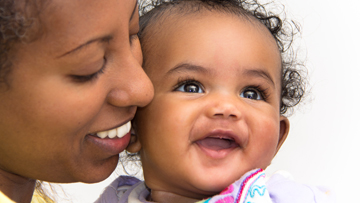
Why is it important to form a secure child-parent bond in early childhood?
It seems intuitive that a secure child-parent bond is important for survival and development. Research shows just how real those benefits are to children:
They are better able to control their negative emotions in stressful situations.
They develop better social competence, learn to match feelings with words in dealing with what’s happening around them, and they are less liable to develop internalizing and externalizing behaviour problems.
They are more confident about exploring the world around them.
They learn through their parent’s caring behaviours to have a sense of worth, and to empathize and cooperate with others. These social skills help them to form strong relationships with peers in the future.
Publications
Attachment in Early Childhood: Comments on van IJzendoorn, and Grossmann and Grossmann

Resources and bulletins
Thematic bulletin
Following in the footsteps of a pioneering canadian researcher in early childhood development
Volume 5, No. 1 - September 2006
Responding to children’s needs: Important developmental milestones in young children
CEECD Parenting Series - November 2009
The Encyclopedia also recommends...
MyBaby is a free online resource about positive parenting | Red River College Polytechnic
Healthy Baby, Healthy Brain -- Love Builds Brains (Attachment / Relationships
Best Start by Health Nexus