The transition into school represents a major step in a child’s life. This topic aims to better identify the skills and abilities that contribute to school readiness and to understand the role of parents as well as the best practices for fostering an appropriate transition and school success.
Synthesis PDF Complete topic PDFInformation sheets
Download the free PDF version here or purchase hardcopy prints from our online store.
School readiness
School readiness: starting school on the right foot

Synthesis
How important is it?
Children and their families experience a large discontinuity as they make the transition into kindergarten. This shift is notable despite the fact that more than 80% of North American children receive care on a regular basis from a non-parental caregiver prior to this transition. Many children are able to make this transition well, behaving skilfully with peers, interacting well with teachers in these new social settings, and appearing generally well adjusted, all of which predict success during the elementary school years. Other children do not make the transition as easily, either because they are not ready for schooling or because schools are not ready for them.
Researchers, policy-makers, educators and parents are trying to discover what it means for children to be ready for school. Important dimensions of school readiness include physical, motor, linguistic, cognitive, social and emotional development, as well as attitudes toward learning and general knowledge. An American survey of kindergarten teachers showed that teachers identified ready children as those who are physically healthy, well rested and well fed; able to communicate needs, wants and thoughts verbally; and curious and enthusiastic in approaching new activities. Parents, in contrast, typically define readiness in terms of academic abilities, such as the ability to count or knowing the alphabet. These two perspectives are complementary and need to be reconciled.
School readiness leads to school success. Accumulating evidence has revealed that children’s performance during the primary school years (kindergarten through grade three) has an important bearing on later success in school and life; in response, understanding how young children are best prepared to enter and succeed in grade school has become a priority for parents, educators, legislators and researchers.
What do we know?
A child is seen as successful in school when a positive attitude about school and learning is developed; supportive social ties with teachers and classmates are formed; comfortable and positive emotions, as well as positive engagement and participation in the classroom, are experienced; and academic achievement and progress are shown.
Research on school readiness has focused on early markers that are closely related to children’s school success. Thus, early signs of cognitive ability and maturity, children’s work-related and learning-related social skills and self-regulatory skills have been identified as factors that contribute to and define “school readiness”. Children’s age is also a marker of school readiness insofar as it indicates maturity in the cognitive, social and self-regulatory domains. However, age per se is a poor predictor of later school success.
Other factors may influence children’s success in school and life, including attributes of the child, family, previous child-care environments and the nature of relationships with teachers and peers. These factors seem to operate according to an interactive (i.e., multiplicative) and transactional (i.e., bi-directional) mode rather than an additive mode. To illustrate, children bring to school their own individual attributes, such as gender, age, aptitude, language, prior experiences and behavioural dispositions (e.g., aggressiveness, self-regulatory abilities, sociability and anxiety-withdrawal), all of which may affect the way they approach their classmates, teachers and the school environment. In turn, the nature of the relationships that children form with teachers and peers makes an independent contribution to their psychological and school adjustment, above and beyond children’s own behavioural and cognitive dispositions. Chronic exposure to the negative (e.g., rejection/victimization by peers or teachers, friendlessness) or positive aspects of these social experiences (e.g., peer-group acceptance) has greater consequences for children’s psychological and school adjustment than transient exposure.
Parents also have a role to play in determining their child’s readiness for school. The quality of parent-child relationships, specifically parental sensitivity and stimulation, has a clear and frequently documented correlation with early school success, either as a main contributor or a protective factor. Also, the quality of the relationship between the parents before their child enters school has been shown to predict the child’s social and academic competence throughout elementary and high school.
Children also benefit from some form of educational program at a very early age. There is research demonstrating that attributes of children’s child-care environment directly affect a child’s transition and adjustment to school. These effects appear even more pronounced among children exposed to high-risk conditions. Programs based on principles of quality care, higher caregiver training and smaller child-staff ratio all contribute positively to a child’s readiness for school. Instructional needs and children’s ability to profit from school depend on the types of instructional settings they encounter as they move from home to school and from grade to grade.
Schools and communities make also significant contributions to children’s connections with school, both in the transition process and in later school engagement.
In sum, a child’s initial experiences in school are critical. Research suggests that children’s school outcomes, especially achievement, remain remarkably stable after the first years of school; interventions are more likely to be successful in the early school years; and how children adapt to their earliest school experiences has long-term implications for cognitive and social development and for dropping out of high school.
What can be done?
Considering the strong links between school readiness and children’s later successes in school and life, attention is appropriately focused on optimizing children’s readiness. Appropriate nutrition, accessible health care, parents as children’s first teachers, and the availability of quality preschool and early education programs have been identified as critical conditions that support school readiness.
Indeed, good-quality infant-toddler programs have been shown to be effective in changing the environments babies experience in the early years in ways consistent with enhancing children’s development. Among the programs that have been thoroughly evaluated, Early Head Start was among the most impressive because it contributed to several aspects of young children’s (two- and three-year-olds) readiness and, at the same time, increased the quality of conditions that support growth in readiness (e.g., competent teaching by parents and appropriate nutrition and health care).
Extensive study of two model programs (the High/Scope Perry Preschool Program and the Carolina Abecedarian Study) has shown that high quality early childhood education can have significant and long-term positive effects on school readiness, and are significantly more beneficial to children from disadvantaged families. Although we know much less about the effects of the typical preschool programs experienced by most children, several studies in the U.S. and elsewhere have demonstrated positive benefits for school readiness.
For the positive benefits of early childhood programs to be long-lasting, programs must be of high quality and focus on didactic learning activities (letters and numbers), while encouraging play-oriented and discovery-learning activities in a language-rich and emotionally-supportive environment. Many successful programs also include a family component. Programs designed to prepare children for kindergarten need to consider the ways in which they teach social and self-regulatory skills, as well as enhance cognitive abilities and engage parents in this process.
It is also desirable to focus on the school transition period to improve children’s as well as schools’ readiness. However, given that school readiness is multidimensional, parents and caregivers still disagree on what the term really means. Transition practices are therefore necessary to help families and schools agree on appropriate ages for school entry and develop congruent expectations for the kindergarten year.
Although opinions differ, certain practices have been shown to result in an optimal school transition experience for children. Preschool and school-age services that are integrated and coordinated maximize success as children enter school. Such practice, which likely results in greater public support and higher quality programs, is currently in place in Sweden, New Zealand, Spain, Scotland and the UK. Prior to the start of kindergarten, a rapport should already be established among the child, the kindergarten teacher, pre-kindergarten teachers, peers and the parent. Practices should be individualized and engage the child, family and preschool setting prior to the first day of school. Multiple aspects of the familial context, such as the couple’s relationship quality, must be addressed in these interventions and should be introduced early, if possible before school entry. The quality of the classroom environment should be constructed to meet children’s needs. There is evidence that teacher training in transition practices leads to increased use of transition practices of all types.
In reality, however, most children receive little in the way of formal assistance before they enter school, and many of the services that are provided are perfunctory in nature and tend to be implemented belatedly, just before children enter kindergarten. Despite greatly expanded investment in preschool programs, the achievement gap between advantaged and disadvantaged children remains. More research is needed to better understand the transition process beginning in the first years of life. From a policy perspective, consensus about the importance of and best practices for maximizing school readiness for all children is lacking.
Discover more
What makes for successful transition to school?
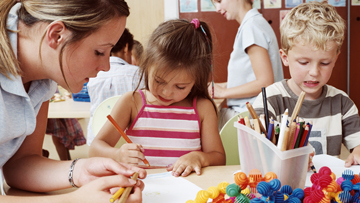
Children tend to transition well to school when:
-
They have early signs of cognitive ability and maturity, and social and self-regulatory skills.
-
They have had access to high quality preschool and early education programs.
-
Their parents get along well with each other, are responsive and provide stimulating experiences.
-
Their school has a small student-staff ratio that contributes positively to children’s school readiness.
-
They have good relationships with teachers and peers.
It pays to do what we can to help children adjust to school. Starting off on the right foot has an impact on children’s success into the later years.
Publications

Resources and bulletins
Thematic bulletin
Canadians are siding with Erasmus!
Volume 1, No. 1 - December 2006