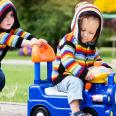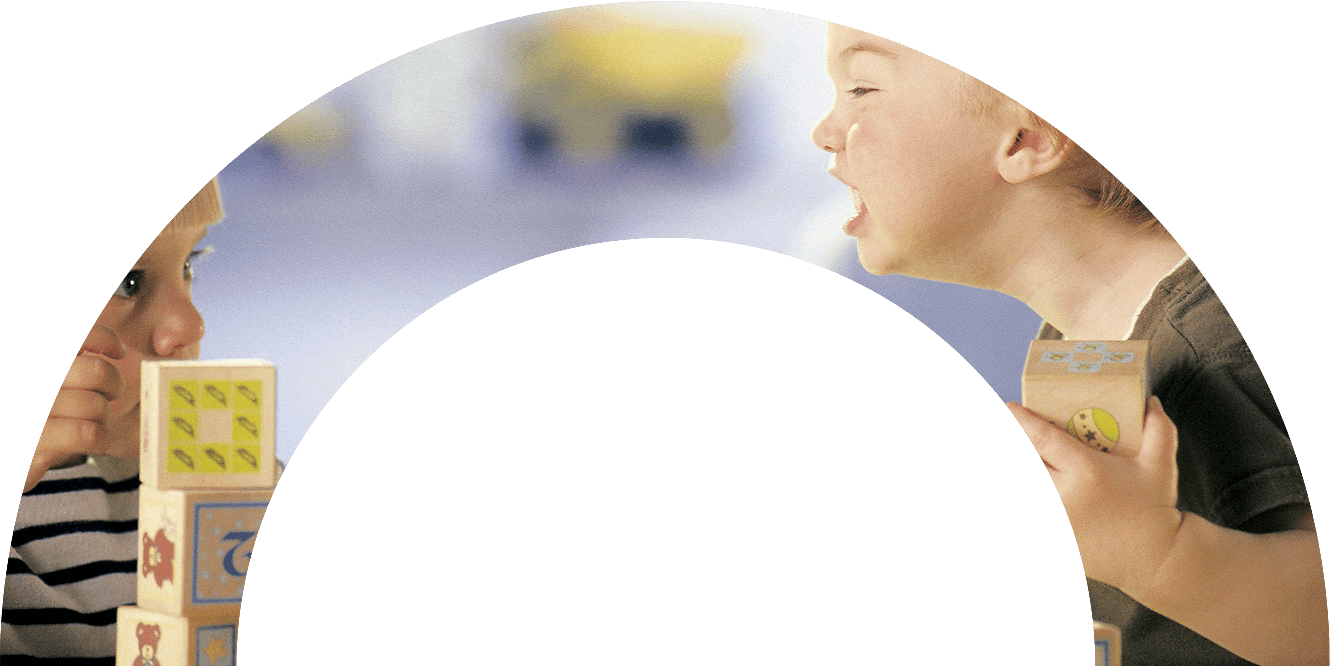
This topic aims to provide a better understanding of aggressive behaviour in young children, its normal course of development, when parents or caregivers should be concerned, and what policies, programs and interventions can be implemented to reduce its long-term incidence.
Synthesis PDF Complete topic PDFInformation sheets
Download the free PDF version here or purchase hardcopy prints from our online store.
Aggression
Aggressive behaviours: you can help to manage them

Aggression
Aggressive behaviours: more support, for better prevention

Aggression
Discipline: how much is enough?

Synthesis
Topic Editor:
Topic funded by:

How important is it?
Most parents of first born are shocked and understandably worried when they see their infant child attempt to hit them when angry. Very few parents expecting their first child know that beautiful young babies express anger with hits and kicks long before they learn to walk. The frequency of physical aggressions increases with age over the first three to four years after birth. Physical aggression is the leading problem in child care centres and the leading reason why preschool children with behaviour problems are referred for clinical help. However, persistent physical aggression usually does not happen in isolation; it frequently co-occurs with other developmental problems like emotion dysregulation, impulsivity, inattention, and delays in language and communication skills. Studies that followed large cohorts of children over many years showed that persistent physical aggression increased the risk for later juvenile delinquency and adult violence.
What do we know?
Most children start using physical aggression between one and two years of age as a response to frustration and as a means to reach a goal. The first aggressive acts displayed with peers are often tugging at another child’s toy, soon followed by hitting. Physical aggression tends to increase in frequency until 30 to 42 months of age and then declines when children develop the ability to regulate their attention and emotions, control their impulses and use verbal communication to resolve conflicts and express needs. There are important differences between individual children in the early display of aggressive behaviour: a majority of children will act aggressively occasionally, a minority will display little or no aggression, and about 5% to 10% of children, mostly boys, will frequently use physical aggression. These children are at greater risk of chronic aggression into late childhood, adolescence and adulthood. Studies showed that chronic physical aggression is associated with social factors, namely mothers’ young age at first delivery, low education, history of behaviour problems, smoking during pregnancy, and low income. Inadequate parenting, conflict in the house, and parental mental health and substance abuse issues are also associated with children’s chronic physical aggression. The consequences of aggressive acts become more serious with age as children become stronger and are less supervised. Chronic physical aggression is a serious social concern because of its individual and social costs.
Sex differences in frequency and level of physical aggression have been consistently reported. Scientists have proposed both social and biological explanations for this difference. Higher levels of physical aggression for boys have been reported by mothers from 17 months of age. Sex differences in aggression therefore appear before they could be extensively affected by socialization. Even though most children show a decrease in the frequency of physical aggression as they grow up, girls tend to reduce their aggression earlier, and the sex differences tend to stay stable through childhood and adolescence.
As physical aggression declines, face-to-face verbal aggression increases, followed by social and relational aggression around 4-5 years of age. The goal of relational aggression is to harm a person’s social relationships and self-esteem, for example by becoming friend with someone else in revenge. It includes non-verbal behaviours such as disdainful facial expressions and direct expressions of rejection. These forms of aggression are slightly more common in girls but are also used by boys, sometimes in conjunction with direct verbal and physical aggression. Both physically and relationally aggressive children tend to lack empathy and attribute hostile intentions to others, but perpetrators of relational aggression are likely to have advanced language skills, contrary to physically aggressive children. Indirect forms of aggression may cause as much pain in victims as physical aggression but perpetrators are less likely to face disapproval by adults and peers. A better understanding of the development of aggressive behaviours should help to establish effective prevention programs.
What can be done?
Most children will show physically aggressive behaviour occasionally, and then learn other means of expressing emotions and solving conflicts. A minority of children will not. Interventions at an early age aimed at helping these children to learn adequate behaviour and emotional responses are warranted.
Intervention can address the at-risk child’s developmental deficits directly (e.g., improving emotion regulation skills) or indirectly by changing the child’s environment (for example by providing parental training). Targeted programs combining parent and child intervention in the preschool years have resulted in improved parenting and decrease in children’s negative behaviour. Interventions can be universal (offered to all children - e.g., a whole child care or kindergarten group) or target specific problems and the children who have them. Prenatal to toddlerhood home visits to support at risk families have been shown to reduce later behaviour problems. Universal programs in preschool can improve children’s emotion regulation and reduce later aggression. A multi-modal intervention for aggressive boys in kindergarten was shown to improve high-school graduation and reduce criminality 15 years later.
Targets for intervention
Development of effortful control in early childhood is critical for the reduction of aggressive behaviours and impulses. Effortful control refers to the voluntary regulation of attention and behaviour, including inhibition of undesirable behaviour and activation of appropriate behaviour. It is linked to the development of conscience, empathy, and internalization of social norms. Poor effortful control is associated with reactive aggression, that is, emotionally-driven reaction rather than unprovoked aggression, and with externalized behaviour problems. Warm, positive parenting can help reduce behaviour problems but the effect of parental behaviour is facilitated by children’s effortful control. Interventions can address children’s problem-solving strategies, support gentle parental discipline, and foster supportive teaching.
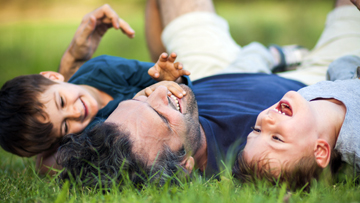
Young children learn self-control, reciprocity and adequate behaviour in part through play with peers, specifically play that demands turn-taking, negotiation, shift in control and restraint like rough-and-tumble play. Studies in other mammals (rats and apes) showed that rough-and-tumble play is critical for the development of the brain area responsible for executive control. One consequence of lacking the opportunity to play in these animals is misreading social signals that could prevent an encounter from escalating into aggression. Human children who engage in rough-and-tumble play show better social skills and play with peer is facilitated by a positive previous experience of playing with parents. This suggest that encouraging play could help children develop the abilities that will help them control their aggressive impulses and assess correctly their peers’ reactions during interactions. When rough-and-tumble play is not socially acceptable, peer-play with similar properties (turn-taking, shift in control, self-restraint) should be encouraged.
Regarding indirect aggression, it should be recognized that social and relational aggression are seriously harmful behaviours perpetrated by both boys and girls. Intervention could start in preschool and preferably involve parents and teachers. The goals would be to teach how to deal with relational aggression, as well as strategies for relationship building and problem solving.
Whatever the strategy, several keys to successful intervention targeting aggression in preschool children are proposed:
- Intervention should include parents;
- Intervention must be flexible yet faithful to protocol;
- Parental intervention should address both parenting behaviour and parents’ knowledge of child development;
- Schools/centres should plan strategies to engage parents in intervention; needs for staff training must be realistically assessed.
Discover more
 Video
Video
Why play-fighting can be good for children?
Play-fighting often makes parents and educators uncomfortable. It can lead to physical injuries and some believe it triggers aggressive or violent behaviours that can impair a child’s early development.
However, studies show that play-fighting, like all forms of playing, is an important source of learning for young children. It allows them, among other things, to:
develop self-control over their impulses and their muscles (for example: control how hard they hit or push)
learn the difference between acceptable and non-acceptable behaviours
learn to create rules and play by the rules
decrease the use of hurtful physical aggressions
In the end, the question is “where do we set the limit?” and the answer is: “play in a way that nobody gets hurt.”
Publications
Play-Fighting During Early Childhood and its Role in Preventing Later Chronic Aggression
Young Children’s Play Fighting and Use of War Toys
Best Practices in the Development of Effortful Control in Early Childhood
 Video
Video
What should you do when children hit?
It’s normal for young children to hit and bite. As their brain develops and their motor ability increases, children will naturally express anger and aggression through such behaviours.
When children start hitting, biting, pushing or slapping, adults should:
react calmly but clearly show their disapproval, each time these behaviour occur
be warm and attentive and reinforce good behaviour
apply age-appropriate discipline that promotes learning (e.g. saying sorry, repairing any damage done)
teach children how to express anger and frustration using words
encourage children to use peaceful behaviours (e.g. cooperate, negotiate, compromise, reconcile)
With the support and guidance of parents and caregivers and by interacting with others, children will learn NOT to use physical aggression and to use more socially-acceptable behaviour instead.
Publications
Best Practices in the Development of Effortful Control in Early Childhood
Effective Daycare-Kindergarten Interventions to Prevent Chronic Aggression
Parent Management Training Interventions for Preschool-Age Children
Resources and bulletins
Thematic bulletin
Public opinion and violence prevention
Volume 2, No. 1 - April 2003
What is all that crying about?
Volume 6, No. 2 - September 2007
The Encyclopedia also recommends...
Origins of Human Aggression: The Other Story
Documentary - National Film Board of Canada - 2005
Early Learning Prevents Youth Violence
Aggression Report - CEECD - 2008
Interactive guide produced by Jean Gervais & Richard E. Tremblay - 2010
Comfort, Play & Teach: A Positive Approach to Parenting, 2007
Comfort, Play & Teach: A Positive Approach to Parenting, 2007
Comfort, Play & Teach: A Positive Approach to Parenting, 2007
Health Baby, Healthy Brain -- Love Builds Brains (Helping your child cope)
Best Start by Health Nexus
The Stockholm Prize in Criminology 2017
Dr. Richard E. Tremblay, 2017 Winner of the Stockholm Prize in Criminology