
To distinguish between restlessness and Attention-Deficit/Hyperactivity Disorder (ADHD), we need to understand the origins of ADHD, its development, the myths and prejudices around it, how to recognize it, and the most effective intervention strategies.
Synthesis PDF Complete topic PDFInformation sheets
Download the free PDF version here or purchase hardcopy prints from our online store.
Hyperactivity and inattention (ADHD)
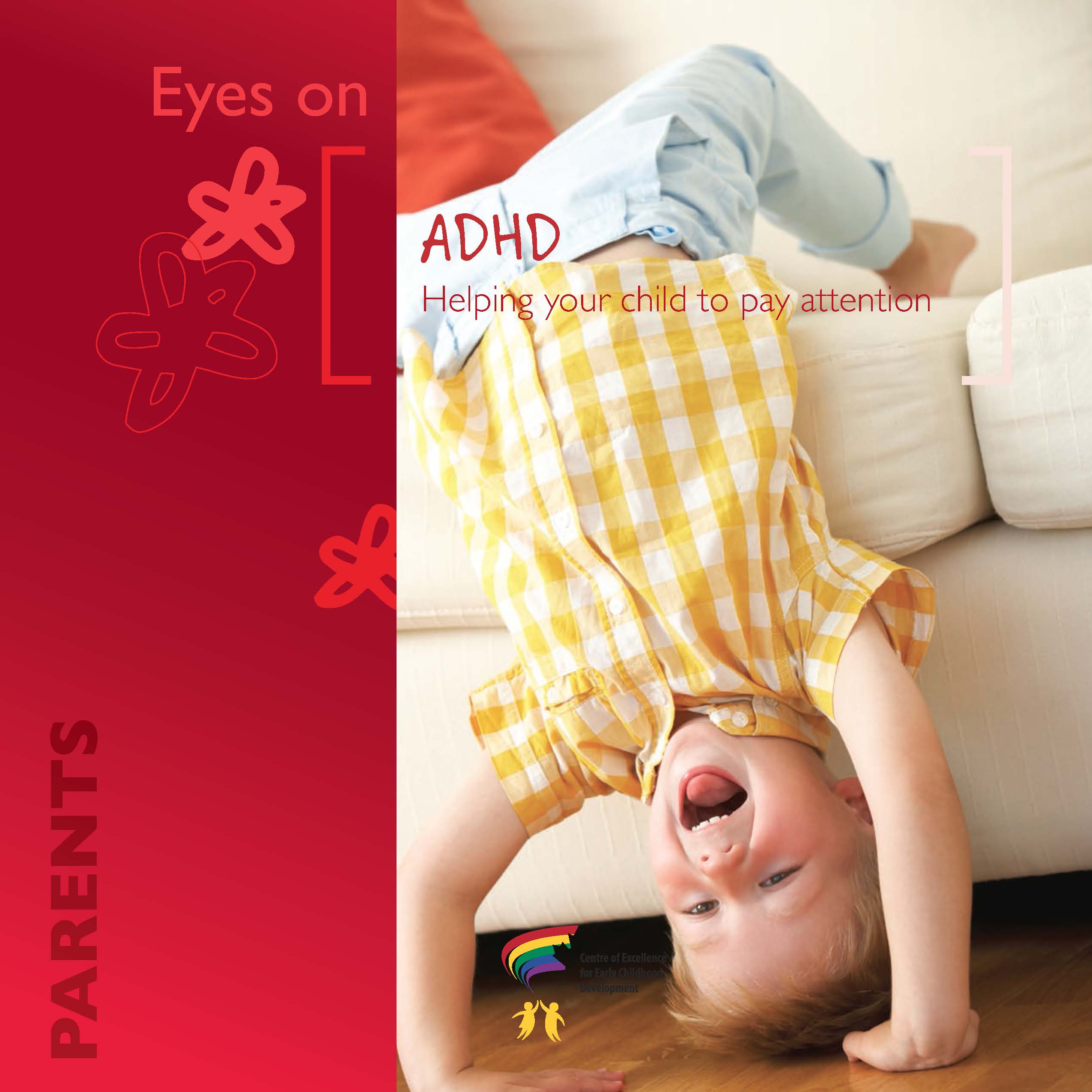
ADHD: Helping your child to pay attention
Synthesis
Topic Editor:
How important is it?
Attention-Deficit/Hyperactivity Disorder (ADHD) is a neurodevelopmental condition defined by atypical, persistent and impairing restlessness, impulsiveness and inattentiveness starting from an early age. There are three presentations of ADHD, based on the type of behaviours that are most prominent: 1) predominantly inattentive; 2) hyperactive-impulsive; and 3) combined. The disorder is diagnosed when the child’s symptoms are present and impairing in more than one context such as in school, at home or in the community. ADHD is estimated to affect 5 to 10% of school-age children worldwide, and boys show higher rates than girls. In 50 to 66% of cases, ADHD tends to co-occur with other psychiatric or developmental disorders, such as anxiety, mood disorders, learning or language disabilities, conduct disorders and sleep difficulties. ADHD often persists into adulthood.
For children, ADHD symptoms and concurrent disorders interfere with academic and behavioural functioning at school, resulting in lower rates of high school completion. Symptoms can also affect peer and family relationships. As they grow older, these individuals are more likely to experience difficulties with employment, relationships, and physical and mental health. Adults with childhood history of ADHD are at greater risk of psychiatric hospitalizations and incarcerations, divorce, risky sexual and driving behaviours, increased emergency room visits, serious injuries and death. In sum, ADHD represents an important public health concern and may engender high personal and societal costs.
What do we know?
ADHD is believed to be caused by an interaction of genetic and environmental factors. Symptoms of ADHD are highly heritable (76%), and emerging discoveries implicate genetic variants that play a key role in brain development. Studies also indicate that ADHD shares genetic risk factors with other conditions such as autism, depression and diabetes. Furthermore, insights from neuroscience have unequivocally shown that the brains of children with ADHD differ from those of healthy comparisons. Among environmental risk factors, researchers have noted the negative influence of prenatal maternal smoking and drinking, maternal depression, low birth weight, poor parenting practices, and living in a disadvantaged neighbourhood.
Children with ADHD experience more academic problems than their schoolmates due to their neuro-cognitive impairments and behaviour. ADHD is often associated with deficits in executive functioning (e.g., planning, organizing, paying attention to important details, and inhibiting impulses). Accordingly, children identified with this disorder are more likely to exhibit learning and/or language disabilities. Results from studies examining the working of the brain suggest that ADHD is associated with atypical activity in the frontal cortex, the brain area responsible for cognitive processes. That said, it is important to note that only a subgroup of school-aged children with ADHD (30%) has executive functioning weaknesses, suggesting it is neither necessary nor sufficient to cause the disorder.
What can be done?
Diagnosis
ADHD is usually first identified and treated among school-age children. However, the presence of hyperactive-impulsive or inattentive symptoms during the preschool years is considered central to establishing the diagnosis. Direct observation of the child can suggest the diagnosis but even the most symptomatic child can be calm and attentive in an unusual setting such as in the doctor’s office. Consequently, assessment should focus on obtaining a history of the child’s behaviour at home, at play and in school from early childhood to the time of the assessment. A typical clinical interview allows an opportunity to discuss how parents and teachers have responded to the child’s difficulties and to identify strategies that have worked and those that have not. Assessment should not be limited to ADHD symptoms but should enquire about associated symptoms that might also be evident such as anxiety, mood or conduct problems. Parents are not always aware of how much stressful circumstances can upset their child; therefore, a direct interview with the child can be an important part of the assessment. Concurrent disorders are an important focus of treatment and their presence can alter the effectiveness of therapy.
Many clinicians find that parent and teacher rating scales are helpful in the diagnostic process as a way of obtaining a description of the child’s behaviour that can readily be compared to age norms. Some children with high levels of restlessness, inattentiveness and impulsiveness have medical problems or developmental delays that must be identified as part of the assessment. Children with learning difficulties may be symptomatic at school and during homework sessions because they are struggling with the academic material. Other children may be symptomatic at home only suggesting some parenting, social or environmental problem. It can be very difficult to identify which children have specific learning difficulties in the doctor’s office. Consequently, consultation with an educational psychologist can be very helpful in getting a complete picture of the child’s strengths and difficulties.
Interventions
Current evidence-based treatments for ADHD include medication and behavioural interventions. Stimulant medication (such as methylphenidate, i.e. RitalinTM) in various short and long acting preparations plays an important role in the treatment of ADHD. More recently, non-stimulant medications, such as Atomoxetine, have also become available. These medications can help a large number of affected individuals by improving their attentiveness, impulse control and reducing their activity level. Also effective are intensive behavioural interventions that involve a combination of self-control training for the child and education in parenting strategies for the parents. Positive parental attention, rewards for appropriate behaviours, and negative consequences for misbehaviours (e.g., prohibiting children from playing with their favourite toy) are recommended procedures in behavioural treatments. Teachers can also apply similar strategies within their classrooms.
Available evidence indicates that the best interventions are a combination of medication, behavioural interventions and school-based programming for behaviour and learning. These treatments have to be intensive and long term to have their optimal impact. That said, some issues with these treatments are that their effects are generally not long-term and tend not to generalize across settings. Future research examining factors that affect treatment outcomes (individual and contextual) should be conducted to improve children’s treatment gains over time and in different contexts.
Discover more
 Video
Video
How to help a hyperactive child?
ADHD can affect all parts of a person’s life. Children with ADHD who take part in early intervention programs tend to need less services in the school, justice and health systems later in life. The condition of children with ADHD can also be improved by combining medication to educational and other interventions. The use of medication may help to reduce the severity of symptoms and thus facilitate the implementation of an intervention.
Early intervention can help children improve:
-
Self-control – how they control their emotions and behaviours
-
Executive functions – structuring and planning, making decisions, judgment
-
Social skills – making and keeping friends, interacting and being confident with others
-
School success – being able to sit still, listen, understand and progress well according to their developmental stage
Getting help in the early years can bring short- and long-term benefits to children as it can mitigate problems associated with ADHD, such as learning disabilities, anxiety, depression and behaviour problems.
Publications
 Video
Video
Understanding ADHD: When does normal become abnormal?
Many people argue that genuine ADHD appears during the pre-school years and that the related symptoms are objective, meaning that any observer would come to the same conclusion. This perspective is often, but not always true.
Although in preschool-age children, diagnosing the disorder is left to specialists, in their daily settings, parents are the experts when it comes to their child. If they perceive that their child is restless, inattentive or impulsive, that he has difficulty controlling his reactions, needs to move or has difficulty to wait his turn, then caregivers ought to listen carefully.
In ideal circumstances, the specialist will work with the parents to observe the child’s behaviour in various settings and also evaluate if the problem might lie elsewhere (e.g., in parental expectations, coping strategies, stress level or socio-economic situation).
In some cases, ADHD can also become symptomatic much later in development, after starting school or even later in the school-age period.
In all cases, the ultimate arbiter of the diagnosis is the presence of impairment, whether it be at the social, academic or emotional level.
Publications
Children with Attention Deficit Hyperactivity Disorder: Epidemiology, Comorbidity and Assessment