Culture shapes experiences and influences children’s development. This topic aims to show how child development and culture are connected, how these influences manifest themselves, and the effects of cultural differences on children of immigrant families.
Synthesis PDF Complete topic PDFInformation sheets
Download the free PDF version here or purchase hardcopy prints from our online store.
Culture
Culture: Understanding Differences
Synthesis
How Important Is It?
With the emergence of globalization and the growth in multicultural nations, it has become imperative to study the link between child development and culture. Culture broadly refers to a group’s shared attitudes, traditions, beliefs and practices that are transmitted across generations. Cultures shape children’s experiences, and cross-cultural work attempts to study the processes by which these influences occur.
Two distinct frameworks have been used to explore the connection between culture and child development. The most commonly used is the etic framework, where a method used to measure a concept, such as social competence, is assumed to be pertinent to all cultures. One potential risk associated with this framework is a failure to explore other more culturally-relevant definitions of a concept. For instance, ren, or forbearance, is used to define social competence in China, and is observed when children detach themselves from confrontation to encourage the opponent to show self-control. Although this construct is different from conceptualizations of social competence in Western countries, the distinction may not be acknowledged through an etic framework. This framework can also be disruptive for the dissemination of local knowledge, practices and traditions that are used to educate children. In contrast, the emic framework considers the meaning of a given concept, practice or principle for members of a cultural group, and is a more unbiased approach to understand how culture influences child development.
Broad cultural trends have been categorized through the dimensions of individualism and collectivism. Individualism is related to Western ideologies about independence and competitiveness, whereas collectivism refers to Southern and Eastern dogma about interdependence and group harmony. Although these dimensions coexist within nations, it is assumed that some cultures are more individualistic, or more collectivistic, than others. A more recent concept has been to assess cultures according to tightness or looseness: “tight” cultures encourage strict adherence to social norms, whereas “loose” cultures tolerate a wide range of behaviours and relationships. Either way, these categories allow researchers to understand why the same behaviour or practice carries different meanings across cultures.
Understanding culture is essential for supporting children and families, as policies and programs are only effective when adapted to local values, beliefs and practices.
What do we know?
Culture influences several spheres of child development. This occurs through physical and social settings, customs and practices of child rearing, and the psychology of the caretakers, particularly parental ethnotheories of child development and parenting. A child’s learning experiences in a culture without an official education system are shaped through their participation with or observation of adults engaging in culturally relevant activities (e.g., girls learning how to weave from their mothers in the traditional Mayan peasant culture). Culture also plays a role in socio-emotional development by either promoting or discouraging particular behaviours. Meanings of behaviours may differ across cultures, as will parent and peer reactions. Although most of the existing knowledge about socio-emotional development comes from studies with North American children, there is evidence for cultural variability. For instance, pretend play is far less common in children from Eastern countries, such as Korea, than in Western children. When this form of play does occur in Eastern cultures, children often impersonate a family member but rarely pretend to be a fairy tale character. An exaggerated emphasis on schooling and the targeted cultivation of narrow skills starting in early childhood through specific toys and games, including digital games, is also becoming a feature of today's childhood culture.
Differences in temperament also exist between cultures. Preschool children from Korea and China tend be more anxious, inhibited and withdrawn, and less sociable than their Western European counterparts. Whereas in Western culture, a child’s inhibited conduct is associated with a risk of troubled peer relationships and internalizing problems (e.g., loneliness and depression), these difficulties are much less common in inhibited children from Eastern cultures. Longitudinal research in China revealed that early behavioural inhibition positively predicted social competence, school achievement and psychological adjustment in childhood and adolescence. These differences can be explained through the meaning assigned to these behaviours. In Western cultures, an inhibited child is perceived as apprehensive and lacking in social skills. In East Asian cultures where group harmony is valued, an inhibited child is viewed as socially-competent, obedient and polite—although recent findings linking social withdrawal to peer rejection in some East Asian countries suggest that may be changing.
Children from cultures emphasizing interdependence tend to act less aggressively and more prosocially than children from nations where independence and competitiveness is valued. Compared to European and American mothers, more Chinese mothers believe that their child should act prosocially to conform with group norms (e.g., fitting in) and emphasize self-control as a childrearing practice. Regardless of the culture, one universal trend is that children who are prosocial and nonaggressive are liked by other children.
When families immigrate from a culture emphasizing interdependence into a culture emphasizing independence, children can receive conflicting socialization messages at home and at school. The Bridging Cultures Project was designed to alleviate this cross-cultural value conflict by training teachers to understand both cultural orientations and make a bridge between them in the classroom.
The meaning of friendship also differs across cultures. In some cultures, children rarely engage in non-familial friendships, and their “friends” are mostly siblings or cousins. In nations such as Cuba and Korea where friendships are an index of success, school-age children report closer relationships with peers compared to North American children. Children in Eastern cultures also use detachment to resolve conflicts with friends while Western children prefer to negotiate with their peers.
What can be done?
The importance of culture requires practitioners and policy makers to be knowledgeable about culture and child development. This is a pressing issue in host nations, where addressing the needs of a diverse population of immigrant children who differ in acculturation (changes resulting from the meeting of cultures) extends beyond a linguistic issue. Immigrant families should also be informed about how different ideologies can contribute to their child’s difficulty with peers in the host country. One way to achieve optimal adaptation for these children is to form positive and productive alliances with families and communities.
Culture-sensitive communication, based on mutual appreciation of diverse perspectives, is foundational for programming early childhood education. Training field workers to be culturally sensitive is essential to understand the meaning of a child’s conduct and allow them to identify it as normal or problematic. The Bridging Cultures Project was designed to train teachers at the preschool and elementary level to become aware of the collectivistic or familistic cultural orientation that children from Latino immigrant families with roots in Mexico or Central America bring with them from home into their school environments. Bridging Cultures professional development also educates teachers to become aware of the individualistic value orientation engrained in the school environment and of the value conflicts between these two cultural orientations. Teachers trained in the Bridging Cultures paradigm have developed many techniques that make a bridge between the familistic collectivism of a Latino immigrant home and the individualism of a U.S. school.
In some cases, professionals require a completely unique approach that includes goals and conditions that are tailored to local beliefs and traditions. These changes are also likely to encourage the involvement of cultural community members in the education of their young children. For example, Indigenous communities in Canada advocate for a formal education curriculum that teaches children about their history, descendants and cultural roles. They also argue that children’s learning can be enhanced through a self-esteem boost, emphasizing strengths rather than deficits.
Caution must be exercised when using standardized methodologies for international comparisons and exporting so-called “best practices” to cultural and national contexts that are fundamentally different from their source. Successful policies and intervention programs are those that have adapted to local beliefs, practices and cultural realities, enabling families to incorporate services smoothly into their lives.
Discover more
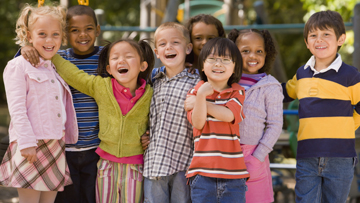
How does culture shape child development?
Through their culture children learn which behaviours and temperaments are preferred or discouraged.
For example, independence and self-esteem are valued in some cultures; interdependence and the strong connections are preferred in other cultures. One universal trend is that children who are pro-social and nonaggressive are liked by other children.
Early childhood educators should be trained to understand and bridge the cultural orientations of children in their classrooms. Intervention programs should always be flexible enough to adjust depending on culture and to help families to incorporate services smoothly into their life.
We all need to understand how culture shapes child development in order to improve the lives of children in a way that respects their cultural backgrounds.
Publications
Culture and Early Socio-Emotional Development
Resources and bulletins
The Encyclopedia also recommends...
BABIES - Movie review by Betsy Sharkey, 2010
Betsy Sharkey reviews 'Babies' a 2010 documentary about 4 babies from different parts of the world.
BABIES | Sleep | Full episode | Netflix, 2020
Researchers delve into sleep, a dynamic time for babies, with studies on twitching, apps and naps.
BABIES | Crawling | Full episode | Netflix, 2020
From how they grow to how they go, three scientists find out that crawling is much more than just a transitional phase.
BABIES | First Steps | Full episode | Netflix, 2020
Scientists venture into the ways that walking changes a baby's world and unveil findings on neonatal reflexes, skeletal development and talking.
BABIES | First Words | Full episode | Netflix, 2020
Experts examine the rhythm and flow of language and explore how babies break down linguistic beats before they know how to speak.
BABIES: Their Wonderful World, BBC, 2018-2021
200 babies are brought together to take part in an ambitious scientific study exploring how the incredible changes that happen in the first two years of life make us who we are.
The Greenspan Floortime Approach
Floortime is an evidence-based intervention created by Dr. Stanley Greenspan.
The Center on the Developing Child at Harvard University
The mission of the Center is to drive science-based innovation that achieves breakthrough outcomes for children facing adversity.
The team at the MEHRIT Centre works with parents, educators, health practitioners, and community agencies to provide learning and training on self-regulation.