This topic aims to provide a better understanding of home visiting programs, their purpose, their differences and their common objectives as a prevention, orientation, guidance, support and education strategy for parents and young children.
Synthesis PDF Complete topic PDFInformation sheets
Download the free PDF version here or purchase hardcopy prints from our online store.
Home visiting
Home visiting: Reaching out to at-risk families
Synthesis
Topic Editor:
Topic funded by:
How important is it?
Home visiting programs are designed to support families in providing an environment that promotes the healthy growth and development of their children. Although programs differ in their approach, populations served and intended outcomes, high-quality home visiting programs can reduce risk and increase protective factors. Visits are conducted by a trained service provider and generally seek to alter the knowledge, beliefs and/or behaviour of children and caregivers, promote positive parenting practices and offer social support to pregnant women or parents of young children. Home visiting may include case management and referrals to community services.
Over the past two decades, a growing number of home visiting programs have been developed and implemented in North America and internationally to support parents and young children. Home visiting programs are implemented in large scale across 46 countries and in limited scope among 55 countries, reflecting increasing global efforts to optimize child development, maternal health and family well-being over the life course. Examples of programs in Canada and the United Sates include Parent as Teachers, Nurse Family Partnerships, Early Head Start, and Healthy Steps, whereas Educate Your Child,1 The Roving Caregivers,2 and Madres Guías3 are examples of programs found in Latin America and in the Caribbean.
Educate Your Child (Cuba) is a non-institutionalized, community- and family-based program available to Cuban children under the age of six years old and pregnant women. Service providers offer individualized care to children and demonstrations of stimulation activities to parents during in-home sessions. Positive impacts on children’s socio-emotional and motor development have been found following participation to the program. The program methodology has been adapted in different countries, including Ecuador, Chile, Brazil, Mexico, Venezuela, Colombia and Guatemala.
The Roving Caregivers (Caribbean countries) is an early childhood development and family support program available to at-risk Caribbean children under the age of three years old. Service providers make regular visits to families to provide a range of services, such as direct support to children and their families, quality care and attention, better health and nutrition and preschool preparation. Children who participated in the program showed improvement in terms of cognitive development, expressive language, visual perception and overall school readiness.
Madres Guías (Honduras) is one of the most comprehensive community- and home-based programs available to children from birth to age four or six years old and to pregnant women living under the poverty line in municipalities with the highest rate of mortality and malnutrition in Honduras (Central America). Madres Guías (i.e., mother guides) provide prenatal education, newborn screening, early stimulation, parental education and support, nutrition services and basic education. Materials used for child and/or parental training are all adapted to the communities’ language and sociocultural conditions.
In the United States, home visiting programs operate in all 50 states, the District of Columbia, 5 territories, and 22 tribal communities, with an estimated 335,000 families receiving more than 3.7 home visits. Over the past decade, the US government has substantially increased funding for evidence-based home visiting models. In 2010, the US Congress included the Maternal, Infant and Early Childhood Home Visiting Program (MIECHV) in the Patient Protecting and Affordable Care Act as a national strategy for improving the health and well-being of families with pregnant women and children ages birth to 5.
What do we know?
Research confirms generally positive overall home visiting effects on many outcomes. Some studies show small average effects but more significant effects for specific outcomes or subsets of participants.
Although program approaches and quality may vary, there are common positive effects on parenting knowledge, beliefs and/or behaviour, and on child cognitive, language and social-emotional development. An increasing number of programs have demonstrated effectiveness in outcomes such as parenting, maternal and child health, child development and school readiness, as well as family economic self-sufficiency. However, fewer programs have improved pregnancy outcomes and parental life-course. Reductions in child maltreatment have been found for some models, but not for others.
The efficacy of home visiting programs is dependent upon the population targeted, providers and home visit content. Programs designed and implemented with greater rigour seem to provide better results. Home visiting programs that are successful with families at increased risk for poor child development outcomes tend to be those that offer a comprehensive focus, targeting families’ multiple needs. Benefits appear greatest when services are provided to subgroups of the population who are most in need (e.g., teen mothers, low-income parents, parents with psychological difficulties or children with disabilities) and when participants are fully involved in the intervention. Larger positive effects on pregnancy outcomes, parental life-course, child maltreatment and compromised caregiving have been found when nurses and/or other professionals deliver services to families instead of paraprofessionals.
Over the past decade, researchers have also studied the impact of home visiting programs on maternal depression and other significant mental health risks and challenges, including substance abuse and intimate partner violence. Quality improvement collaborations can help maximize application of mental health screening, referral and services, while new approaches such as in-home cognitive behavioural therapy (IH-CBT), interpersonal psychotherapy (IPT), Listening Visits, and an adapted Mothers and Babies intervention have shown positive results, helping to reduce maternal depression.
What can be done?
Identifying core components of interventions found to be effective, and understanding what it takes to implement those components with fidelity to the program model, is critical to successful replication and scale-up of effective programs and practices in different community context and populations. In assessing the efficacy of home visiting programs, it is important to include measures of multiple child and family outcomes at various points in time and to collect enough information about participants to allow for an analysis of the program effects on various types of subgroups. In recent years there has been increased attention to a precision-based approach to home visiting research, which aims to identify what aspects of home visiting work for which families in what circumstance. This can lead to services that are more closely aligned with family preference and needs, resulting in greater benefits.
Best practice and emerging research suggest that home visiting staff need training, supervision and fidelity monitoring, a supportive organizational climate, and mental health supports to sustain high-fidelity implementation of programs over time. Training for home visitors should include guidance on balancing conversations about family-identified needs with discussion about mental health and other psychosocial risk factors that can impair effective parenting, child development and family well-being.
In the wake of the Covid-19 pandemic, programs have had to innovate to creatively maintain outreach to families, including virtual methods of service delivery. The pandemic also brought to light the disparities and inequities of our early childhood service systems. Research and evaluation that includes various stakeholders promises to provide insights and perspectives that can strengthen the impact of home visiting programs. Policymakers and practitioners should recognize the importance of program evolution to meet the changing needs of families and communities.
References
- UNICEF. La Contextualización del Modelo de Atención Educativa no Institucional Cubano “Educa a tu Hijo” en Países Latinoamericanos. http://www.child-encyclopedia.com/sites/default/files/docs/contenu/educa_a_tu_hijo_unicef_siverio.pdf. Accessed September 11, 2017.
- Foundation for the Development of Caribbean Children. Family & Community Intervention. https://desarrollo-infantil.iadb.org/en/innovations/roving-caregivers. Accessed February 28, 2022.
- Vargas-Barón E. Going to Scale: Early childhood development in Latin America. Washington, DC: The RISE Institute; 2009. https://www.child-encyclopedia.com/sites/default/files/docs/contenu/Vargas-Baron_2009_Going-to-Scale-Early-Childhood-Development-in-Latin-America.pdf. Accessed September 11, 2017.
Discover more
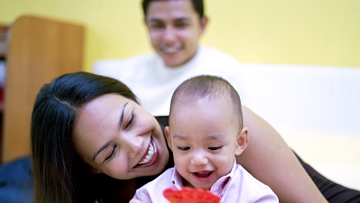
How can home-visiting programs help families?
Trained service providers who visit families with young children can reach those who might not otherwise seek out support.
The intimacy of visiting in the home can make parents more comfortable about opening up and identifying their needs. It also helps home visitors to better tailor their support and guidance to the families’ needs.
From observing the family in their home, home visitors can build on their strengths and can also identify risk factors in the children’s growth and development, such as maternal depression, poor parenting practices, and lack of support.
Many parents can sometimes feel isolated and home visits from a trained service provider can offer a valuable connection to the outside community and the services available.
Publications
Evidence for the Role of Home Visiting in Child Maltreatment Prevention

Resources and bulletins
Thematic bulletin
Re-creating Florence Nightingale: Home-visiting programs with at-risk families
Volume 3, No. 1 - March 2008