
Social violence has an impact on children’s physical, social and emotional development. This topic looks at how to confront and prevent potential negative outcomes in children exposed to social violence and how to intervene and set up the necessary resources.
Synthesis PDF Complete topic PDFSynthesis
Topic Editor:
Topic funded by:

How important is it?
Social violence refers to any type of violence committed by individuals or the community that has a social impact. These violent acts take various forms across countries, including armed conflicts, gang violence, parent-to-child physical aggression (e.g., corporal punishment), terrorism, forced displacement and segregation. Exposure to violence can be direct (e.g., being the victim of a violent act) or indirect (e.g., hearing about violence or witnessing violence involving others). Over the last decade, more than two million children under the age of 18 have died worldwide as a result of armed conflict and at least six million have been seriously injured. It is also estimated that 25% and 40% of children aged between 2 to 17 years old in the United States and southern regions of Africa, respectively, are exposed to violence in their community. In addition to growing up in adversity, most of these children are also socially excluded from formal education, health care, electricity, potable water and sanitation services.
Despite these high estimates, preschoolers’ exposure to social violence has received little attention during the previous decades in comparison to older children. Yet, social violence is an especially important topic to study during this developmental period given that it influences children’s development across multiple domains (physical, social, neurological and emotional) and at different levels.
What Do We Know?
Young children are especially vulnerable to social violence due to their limited abilities to regulate their psychological distress, reduce the threat or remove themselves from the situation. By being exposed to direct or indirect forms of social violence, they are likely to experience severe, uncontrollable and chronic stress, in turn influencing brain systems that respond to stress. More precisely, heightened exposure to community violence creates a constant state of fear by increasing children’s sensitivity to external stimuli (e.g., sounds) and by reducing their ability to refrain from engaging in a particular action. Accordingly, these reactions put them at increased risk of developing mental health disorders, including depression, anxiety and post-traumatic stress disorder (PTSD), experiencing negative health, social and educational outcomes and engaging in risky behaviours (e.g., substance abuse, aggression) throughout childhood and adulthood. These adjustment problems are also likely to occur when children experience corporal punishment. Instead of improving disruptive behaviours, parents’ use of physical force actually predicts more aggressive, delinquent and antisocial behaviours in children.
It is important to bear in mind that factors, such as children’s age and gender, the degree and the type of exposure (direct or indirect, through its impact on caregivers) and the cultural context, all influence the negative impact of social violence on children. For instance, the effect of community violence on internalizing problems (e.g., depression, anxiety) is stronger for younger children than for older ones. However, as they grow older, children become increasingly engaged in response to community violence and experience more externalizing problems (e.g., aggressive/violent behaviours) than younger children. Children living in economically-disadvantaged neighbourhoods are the most at risk of being exposed to community violence. Lastly, children’s behavioural responses to community violence are influenced by their mother’s reaction to violent events. Research findings indicate that maternal depressive behaviours in response to community violence tend to increase children’s problem behaviours.
What Can Be Done?
Confronting and preventing the negative outcomes associated with social violence exposure requires community- and societal-level interventions designed to foster individual, family and community resilience. Considering that violence exposure increases children’s likelihood of engaging in risky behaviours as they grow older (e.g., aggression and school dropout), using multipurpose programs designed to address early risk factors is one avenue to promote children’s social, emotional and behavioural functioning. Another important factor that buffers the influence of social violence on children’s problem outcomes is caregiver well-being. Interventions offering supports to families exposed to violence are encouraged (e.g., home visits). Parents should also be provided with an adequate shelter, sufficient food, clean water and health care to support family functioning. These supportive resources are likely to diminish caregivers’ distress, in turn lowering the odds of older children perpetuating violence. Specifically, parents who have access to supportive services are in a better position to provide safe, stable and responsive care to reduce the negative consequences of violence exposure on children. In addition to buffering the negative impact of violence exposure on children, interventions aimed at improving family functioning and access to supportive services are likely to be useful in reducing the use of corporal punishment.
It is also important that government and non-government agencies (e.g., social organizations, academic and research centres) unify their efforts and act proactively in order to prevent/reduce the occurrence of social violence. As an example, the Brazilian National Council of Health State Secretaries (CONASS), in collaboration with its partners, has compiled a series of intervention strategies and policy programs to address and prevent violence. Implementing public education campaigns, promoting the training of family health program teams, and making changes to legislation to reduce violence on the roads are part of their proposals to address social violence. Lastly, policy makers should be attentive to the way current and future policies influence the causes of armed conflicts and how they may potentially maintain and reinforce exclusion of subgroups. The protection of all members of the society and equal access to resources should figure among governments’ priorities.
Discover more
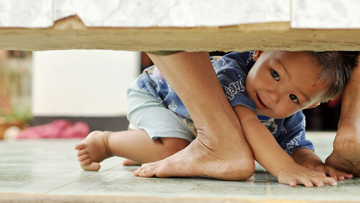
How are young children affected by being exposed to social violence?
Social violence affects children at different levels and in many ways – physically, socially and emotionally.
They are more likely to experience severe, uncontrollable and chronic stress, which affects their ability to react to stressful situations. If children are in a constant state of fear, they become sensitive to external stimuli (e.g., sounds) and have trouble bouncing back from negative feelings.
Over time, these reactions can lead to mental health disorders, including depression, anxiety and post-traumatic stress disorder. They can also lead to health, social and school problems, and can make children more likely to engage in risky behaviours (e.g., aggression, substance abuse) throughout childhood and adulthood.
It’s clear that violence is harmful to children. Every effort should be made to shelter children from it and to find effective ways to support those who have been exposed to it.